
Arrest Warrants in Bailey County
Texas Chapter 15 governs arrest warrants. It defines the warrant as a written order. A magistrate signs it and directs a peace officer to take the accused into custody. Behind it sits a sworn complaint. The complaint names the person or a description, states the alleged offense, and carries the affiant's signature plus any known time and place. A magistrate issues the warrant only when the legal standard is met. Felony files in Bailey County run through the 287th Judicial District Court, and the Bailey County District Clerk keeps those records. A magistrate, JP, county, or municipal judge may issue process within that court's authority, while the Sheriff or a city police officer may serve it; the issuing court remains the source for case status.
Bailey County Arrest Warrants Follow Chapter 15
Texas Chapter 15 sets the whole arrest-warrant and complaint framework. The complaint is the sworn backbone. The warrant is the written command to a peace officer. Bailey County process does not require a district judge. Authority turns on the offense and the magistrate's role. A district felony file goes to the 287th Judicial District Court, which serves Bailey and Parmer Counties. Ask which office holds the document before requesting a copy. The 287th District Court page identifies the courthouse contact channel for Bailey County, while the District Clerk keeps the case records and process.
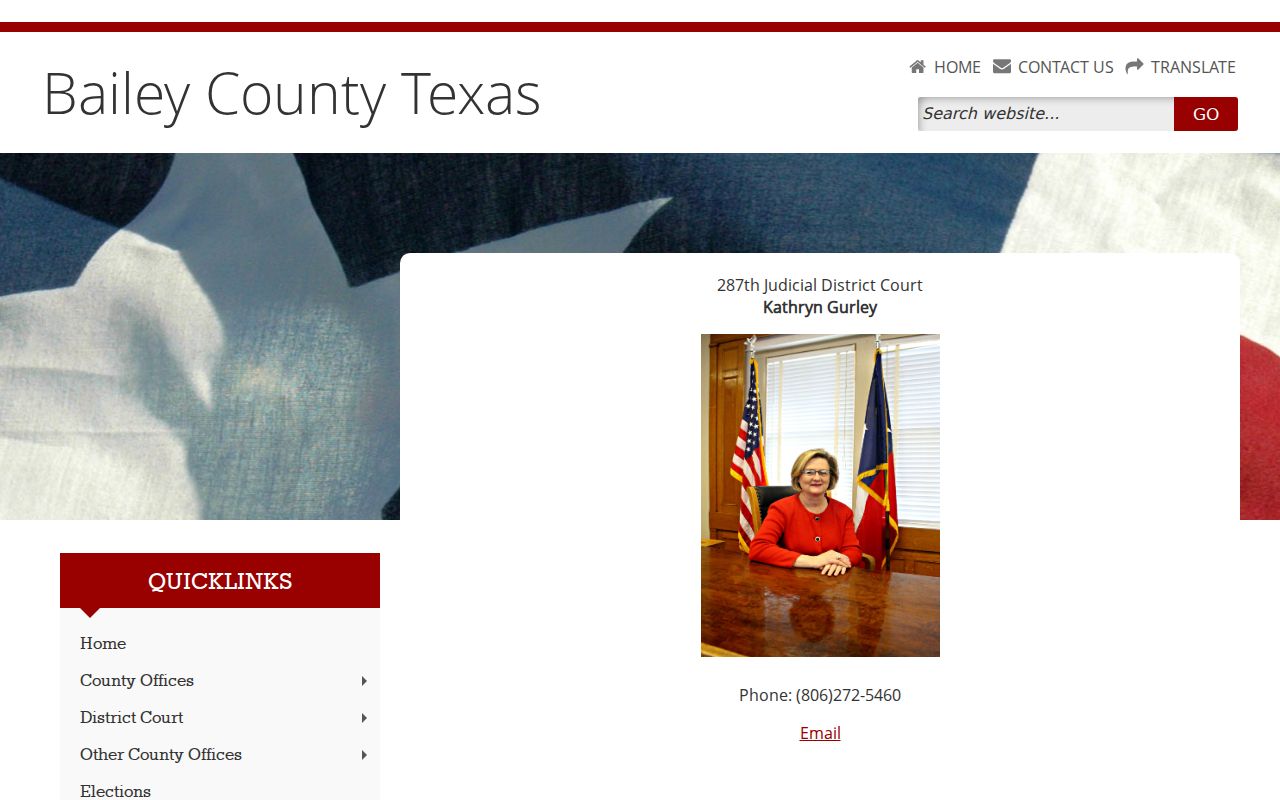
That court's contact route helps identify who holds a district case. It is no online roster of Bailey County arrest warrants.
What a Bailey County Arrest Warrant Contains
Bailey County publishes no sample warrant for public view. The fields described here are common record elements only. The local warrant-number format is not on public display either. Use the court and cause number to ask the District Clerk or issuing clerk for the right file. Then confirm bond and status with the court.
| Warrant/cause number | Court-assigned identifier; no Bailey format was published. |
|---|---|
| Named subject | Confirm identity with the issuing office, not a name-only match. |
| Charge/offense | May state the alleged offense, statute, or classification. |
| Issuing judge/court | Shows which court or magistrate authorized the process. |
| Bond/bail | Ask the court for amount, type, and any hold conditions. |
| Date/status | Issue, service, return, recall, and update dates may differ. |
Bailey County Arrest Warrant Complaints Identify a Case
A complaint can name the accused. It can also give a definite description, state the offense, list the facts and any time or place known to the affiant, and end with the affiant's signature. It is not a public warrant roster. Whether an affidavit or filing can be inspected depends on the case and any sealing or law-enforcement restriction. Texas Articles 15.04 and 15.05 spell out the requisites. A district felony question in Bailey County goes to the District Clerk. City or JP matters go to that court. A broad name search never replaces the file record. For the statutory process, read Texas Chapter 15.
How Bailey County Arrest Warrants Are Served
The Bailey County Sheriff answers arrest and service questions. Muleshoe PD lists patrol and investigations contacts. It offers no public warrant lookup or service map. The county pages do not name the current constable or city-marshal assignment, so ask the Sheriff which officer handles a specific order. An arrest brings booking and magistration next. Texas law requires a magistrate to set bail without unnecessary delay, and under Article 17.028 that decision generally comes no later than 48 hours after arrest, subject to legal exceptions. Bond or release does not dispose of the underlying case.
Bailey County Sheriff Routes Arrest Warrant Service
The Bailey County Sheriff's Office at 405 West 2nd Street is the primary contact for service and custody routing. Its page lists 806-272-4268 plus the Jail Administrator at 806-272-7619. No warrant-unit name, direct line, or walk-in hours appear. Muleshoe PD posts patrol and investigations contacts of its own. It offers no online warrant search. Call before you travel. Ask which agency handles the specific order, whether the issuing court must act first, and where counsel should coordinate a voluntary appearance. The Bailey County pages do not confirm the exact constable or city-marshal structure. The Sheriff's official contact page is the local routing point.
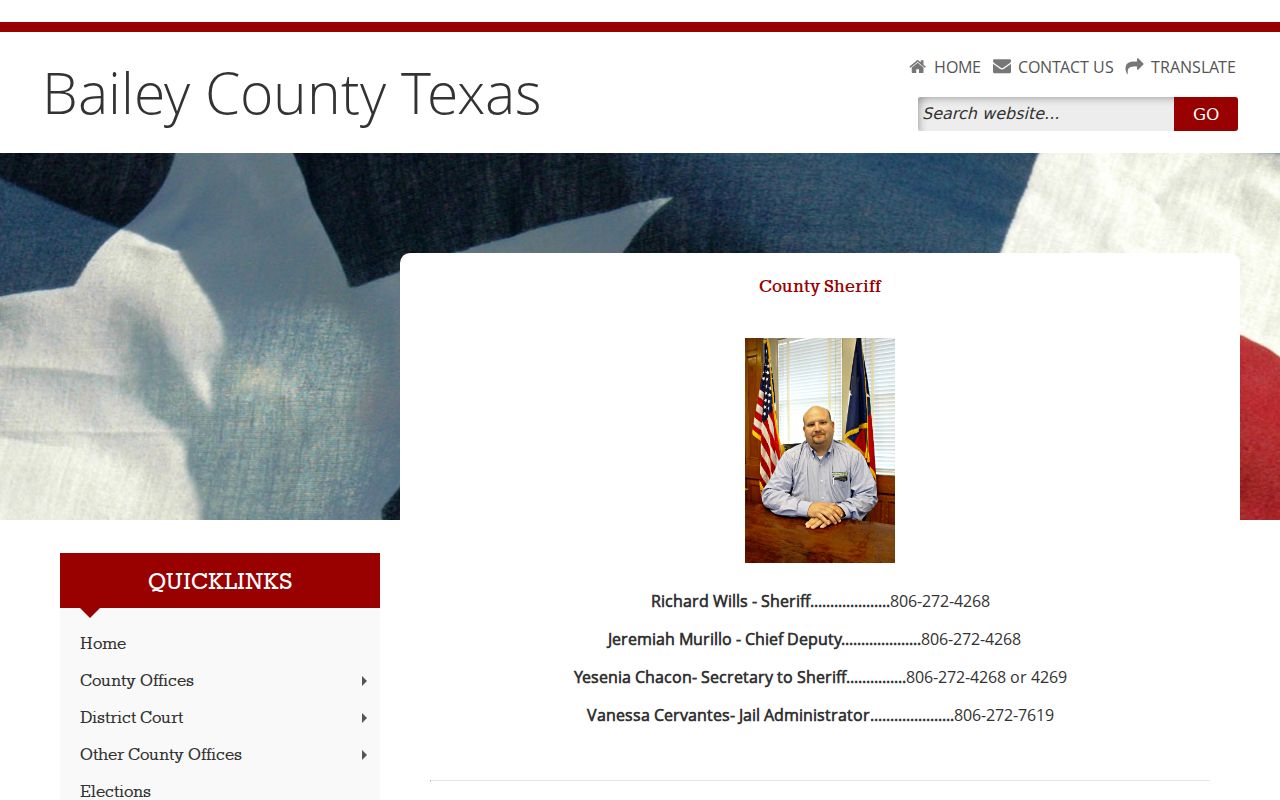
The Sheriff's page lists Bailey County contact routes. It names no separate warrant unit and sets no walk-in surrender terms.
Arrest Warrant vs Summons vs Bench Warrant
An arrest warrant authorizes custody on a criminal complaint, while a summons just directs the person to appear. A bench warrant follows a missed court obligation or order. The issuer and case type set the response. For the missed-setting path, see the Bailey County bench warrant details.
| Feature | Arrest Warrant | Summons | Bench Warrant |
|---|---|---|---|
| What It Orders | Custody of the accused | Appearance on a set date | Custody after an unmet court duty |
| Basis | Complaint and probable cause | Charging or court process | Failure to appear or comply |
| Who Issues It | Magistrate with authority | Court or authorized officer | Judge in the pending case |
| How to Respond | Contact counsel and issuing court | Appear as directed | Ask about recall or a new setting |
Lubbock Division Routes Bailey County Federal Warrants
A federal warrant runs on a different track than anything in a Bailey County courtroom. Bailey County sits in the Northern District of Texas, Lubbock Division, and the U.S. Marshals Service counts it inside that district. Federal work may pull in the North Texas Fugitive Task Force rather than any county citation portal. PACER can show docket filings. It is not a live warrant-status system, though, and sealed material may not surface there. A Muleshoe or JP search answers nothing on this front. For a federal question, go through counsel and the federal court or the Marshals' official channel. The federal venue page and the U.S. Marshals district page lay out that separate route in full.
Bailey County Bond Rules for Arrest Warrants
Texas law recognizes cash, surety, and personal bonds. Bailey County publishes no bond schedule, no online bond portal, no jail payment list, and no walk-through form, so the court sets every term itself. A general fine-payment page is not bond instruction. Posting a bond does not close the case, either. Start by asking the issuing court exactly what has been set, then call the Jail Administrator about where an authorized release step happens. Confirm whether counsel must file a motion or arrange a planned appearance. Keep the order and any receipt you receive. Then ask the clerk when the docket will reflect the court's action on your Bailey County warrant.
What to Do If There's a Warrant for You
Call the issuing court first. Ask whether the Bailey County warrant is still active, what bond or appearance term applies, and whether the judge would entertain recall, quash, or reset. A lawyer can work the clerk, set up a planned walk-through, and coordinate with the Sheriff if surrender is the court's direction. Bailey County publishes no walk-in form, bond window, or accepted bond-payment instructions. If told to report, phone the Sheriff's Office or Jail Administrator before you go. Confirm the location, what to bring, and whether counsel should come along. A bond can settle custody conditions. The criminal case itself stays open until the court says otherwise.
Important: If you suspect an active arrest warrant, contact counsel and the issuing court before arranging surrender; Bailey County has no published walk-through procedure.